Friday, January 18, 2013

Pack a Picnic for Paradise: No need to bring extra for the Wildlife

By Lisa Miller, Public Lands Programs Intern
Cascade Fox -  Courtesy of Dave Cowell Photography
Now that we humans have fully embraced the winter season, stocked the pantry with food and piled on the layers of warm clothing and firewood; we would like to turn your attention as to how other animals prepare themselves and survive the winter.

Animals such as the rare Cascade Fox, found only at Mount Rainier and Mount Adams, are working hard to gather a cache of food for the winter. The foxes take great care in keeping their supply safe, hidden, and healthy. With relatively small stomachs for their size foxes eat small meals frequently, thus if they are successful in catching large prey they will save most of it to last several meals. Foxes spread their caches across large areas to prevent the loss of all their reserves in the event of spoilage or raid. If one small reserve is lost the fox can usually recover those calories with little stress.

Food scraps and debris from meal preparation are the items least likely to be considered litter; however these are among the most harmful types of litter. Leaving behind small scraps out of pity for the animals trying to make it through long winters does not increase their chance for survival in fact it does the opposite. When an animal happens to find an apple core or cracker crumb and take it back to their cache there is an introduced risk of contaminating the rest of their “pantry.” For example, imagine the carton of raspberries in your refrigerator, when one starts to grow a little fuzz action must be taken quickly to save the rest. Now if you have several fridges to monitor you may not notice that the supply has started to go bad and by the time you return everything is wasted, including all the energy it took to collect the raspberries in the first place.

Winter is one of the hardest times of the year for most animals due to the lack of available vegetation, frozen water sources, shorter daylight hours and increased stresses on the body. Local wildlife come to rely on the food that is left behind by frequent visitors during the warmer months when outdoor recreation is high and can slowly lose the ability to forage and hunt for themselves and their offspring. Higher rates of starvation in the winter occur if they have not been gathering food supplies. Many others do not survive due to habituation to people and the roadways, several foxes have been hit by cars attempting to find another Snicker's bar.
Cascade Fox at Mount Rainier - Courtesy of Kyle Wicomb

It can be tempting and exciting to feed small wild animals such as Townsend's chipmunks, Steller's jay, and the Cascade fox, however bringing these animals into areas of heavy traffic and visitors also brings their larger predators such as black bears and mountain lions into those same areas. Over time, both large and small animals become comfortable in the presence of humans and their natural behaviors change, including aggressiveness.

Thus, a seemingly harmless act of throwing out an apple core can be detrimental to the wildlife during harsh winter months, but there is not any time of the year it would be acceptable. Properly storing food as well as any other scented items is the easiest way to keep animals a safe distance away. There are several simple ways you can minimize your impacts and likelihood of further habituating wildlife, it all starts at home when planning your trip. Using a storage bag to mask the sight and smells of your food is a great practice; try an OPSAK or Grub Pack. If you are only going for a picnic preparation is still very important, repackage snacks together to avoid excess garbage, such as twist ties and corners of packaging. For those times you are going deeper into the backcountry take a Bear Vault or bag and most importantly know how to hang it out of an animal’s reach.

As of January 2013 Cascade foxes have been sighted in areas of winter camping at Paradise, and tracks were seen around a tent at Longmire. Currently Mount Rainier National Park and U.S. Geological Survey are conducting research to assess visitor activities and impacts. Educating the public about these behaviors and enforcement of no-feeding laws will continue to be a major part of the project. Luckily, Wildlife Ecologist Mason Reid has reported the foxes seem to be less persistent along the roadways and wilder than in past years. As visitors become more informed in how they can keep wildlife wild this trend is expected to continue.

Wednesday, October 17, 2012

Human Ecology on the Olympic Peninsula: Mapping Visitor Values

7-9 pm, November 14, 2012
The Mountaineers Program Center, Goodman B
7700 Sand Point Way NE, Seattle, WA 98115

Trail registers, backcountry permits and campground reservations provide the Forest Service with only limited insight into how the public enjoys the land and water resources on National Forests. 


 Human Ecology Mapping or "participatory mapping" offers a promising new, more robust approach to gathering social and cultural data on how National Forests are utilized for recreation and conservation.  On November 14, the public is invited to learn about new methods for mapping human-centered values on our public lands and participate in an interactive mapping session of landscape values and activities of visitors to the Olympic Peninsula, conducted by researchers from Portland State University and the U.S. Forest Service Pacific Northwest Research Station. 
U.S. Forest Service Day Use and Areas of Interest Map,  www.fs.usda.gov

  Bring your personal stories and thoughts about the places you love on the Olympic Peninsula.  Results from the research will be used to identify areas of high value and intense use for future land management and planning activities. 

For more information about this event, contact Sarah Krueger, sarahk@mountaineers.org.  

Wednesday, October 10, 2012

Calling ALL Volunteers

  OLYMPIC HOT SPRINGS CAMPGROUND REVEGETATION VOLUNTEERS NEEDED

  The Olympic Hot Springs campground, located at Boulder Creek in the Elwha
  River valley, is being transformed into a wilderness camp area.  This
  year we have 12,000 plants to plant on-site.  The work at Boulder Creek
  campground is preparing the soil for planting (tilling by hand), planting
  the plants that have been raised in the park greenhouse/nursery, hauling
  water and watering the transplants.  We fit the work to the interests and
  level of physical labor that people are comfortable with. 

  If you can  help us with any of these tasks you would be contributing to an exciting
  project and your work would be greatly  appreciated!


We'll be working on the project in October and likely November.  


Friday, October 12-14, then Wednesday, October 17 through Saturday October 20.  People can come
up and back daily with a National Park Service representative or camp on-site and work several days.  Volunteers in the past weeks have been doing all such combinations. 

It is a two mile gentle hike from the trailhead to the campground where we are working.  The trailhead access is closed other than with an NPS representative so volunteers meet in Port Angeles or the Elwha Ranger Station and travel together. 

 If you are interested please contact Ruth Scott, Wilderness Resources Office, Olympic National Park:
  (360) 565-3071 or ruth_scott@nps.gov.


On Arctic Ground: Paddling the Wild Rivers of Northwest Alaska


Come join The Mountaineers for a multimedia exploration of the wild rivers in Alaska's National Petroleum Reserve on November 15th, 2012. Experience Alaska's frontier with video, audio recordings and still images presented by an Alaska based author and adventurer, Debbie S. Miller as she shares stories from the largest single unit of public lands in the United States.


Based on Miller's newly-released book, On Arctic Ground: Tracking Time Through Alaska's National Petroleum Reserve, this presentation will showcase highlights from the last 37 years Miller has spent travelling, whitewater canoeing and exploring throughout Alaska's wilderness. 

Image (c) Florian Schulz
Please come enjoy an evening of travel and adventure across the 23-million acre expanse of land known as "the Reserve." 


On Arctic Ground: Paddling the Wild Rivers of Northwest Alaska
November 15th, 2012, 7 pm The Mountaineers Program Center
7700 Sand Point Way NE, Seattle, WA


Free Admission and Book Signing
Beer and Wine by donation, provided by Alaskan Brewing.
Proceeds benefit Braided River

Event sponsors include The Mountaineers, Braided River, The Alaska Wilderness League, The Sierra Club and American Whitewater.  

Tuesday, October 9, 2012

The North Cascades Get Wilder

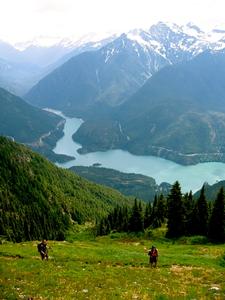
The new Thunder Creek Wilderness Area.
Image courtesy of National Park Service
Posted by Sarah Krueger, Public Lands Programs Manager

The North Cascades just got a little wilder.  On September 14, Secretary of the Interior Ken Salazar administratively added 3,559 acres of Wilderness to the Stephen Mather Wilderness area, which includes parts of North Cascades National Park and Ross Lake and Lake Chelan National Recreation Areas.  The newly protected area encompasses the Thunder Creek valley follows Thunder Arm of Diablo Lake, harbors lush low-elevation old-growth forest, and provides shoulder-season hiking opportunities out of the Colonial Creek Campground.
The Washington Parks Wilderness Act of 1988 originally identified the Thunder Creek Valley as potential wilderness, but the area was not federally protected due to plans by the City of Seattle to harness Thunder Creek’s aquamarine glacial waters for hydropower development.  However, the 1988 act that created a swath of protected wilderness areas within Olympic National Park, Mount Rainier National Park and North Cascades National Park Service Complex, also included a provision that the Thunder Creek Potential Wilderness Area could be could be administratively designated at the direction of the Secretary of the Interior, if and when non-conforming uses are terminated.  Since the City of Seattle abandoned plans to develop hydropower on Thunder Creek, and with no other uses planned for the area, the Secretary was able to designate this area as Wilderness, as directed by the 1988 Washington Parks Wilderness Act.   

The Mountaineers, along with 12 other conservation and recreation groups representing Washington State, sent a letter to Secretary Salazar, supporting an administrative decision to designate Thunder Creek as Wilderness. The wilderness addition marks the first lands managed by the National Park Service that have been added to the National Wilderness System in 14 years in Washington State.